Google Ads for Lawyers
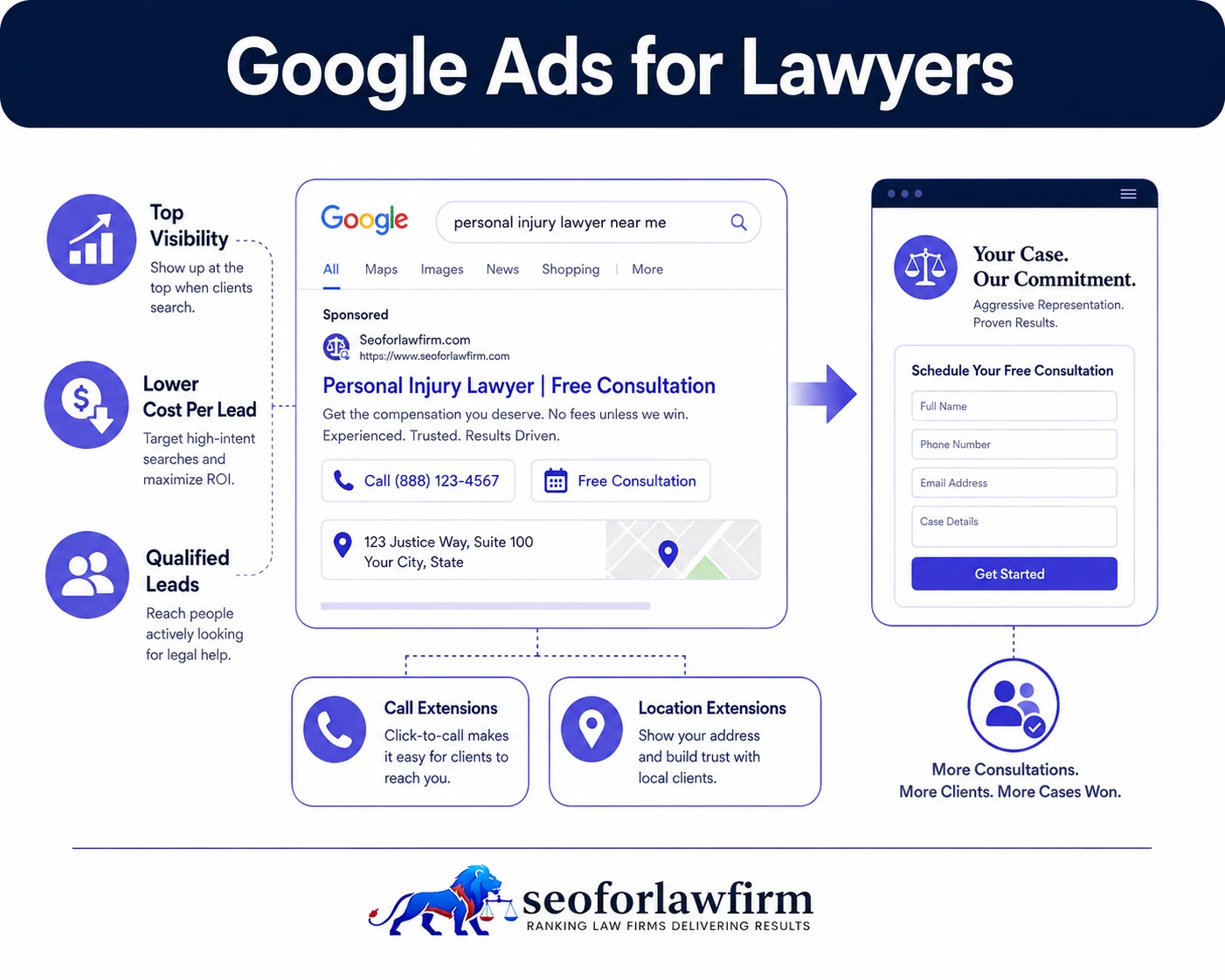
SEOForLawFirm structures Google Ads around the legal searches most likely to represent immediate attorney demand.

SEOForLawFirm provides PPC management for law firms that connects paid search with qualified legal enquiries and consultation opportunities.
We align Google Ads, search terms, location targeting, bidding, landing pages and call tracking with the cases your firm accepts. At SEOForLawFirm, I assess lead quality and intake capacity before recommending a larger advertising budget.
Example: car accident lawyer near me
Real stories from our clients—read how firms describe their work with SEOForLawFirm.
“Our PPC account was spending heavily without giving us a clear picture of which searches were producing qualified cases.…
“Criminal defense leads move fast, so our ads needed to appear when someone was ready to call immediately after an arrest.…
“Our previous campaigns were generating clicks, but the spend was spread across too many general family law terms.…
Service components are planned around your firm's priorities, current systems and the matters it wants to attract.
SEOForLawFirm structures Google Ads around the legal searches most likely to represent immediate attorney demand.
Local PPC limits paid-search exposure to the markets where the law firm serves clients.
Paid legal traffic converts more effectively when the landing page directly matches the query and ad promise.
Legal PPC ad copy must communicate relevance quickly because the prospective client is comparing multiple attorneys within the same search results.
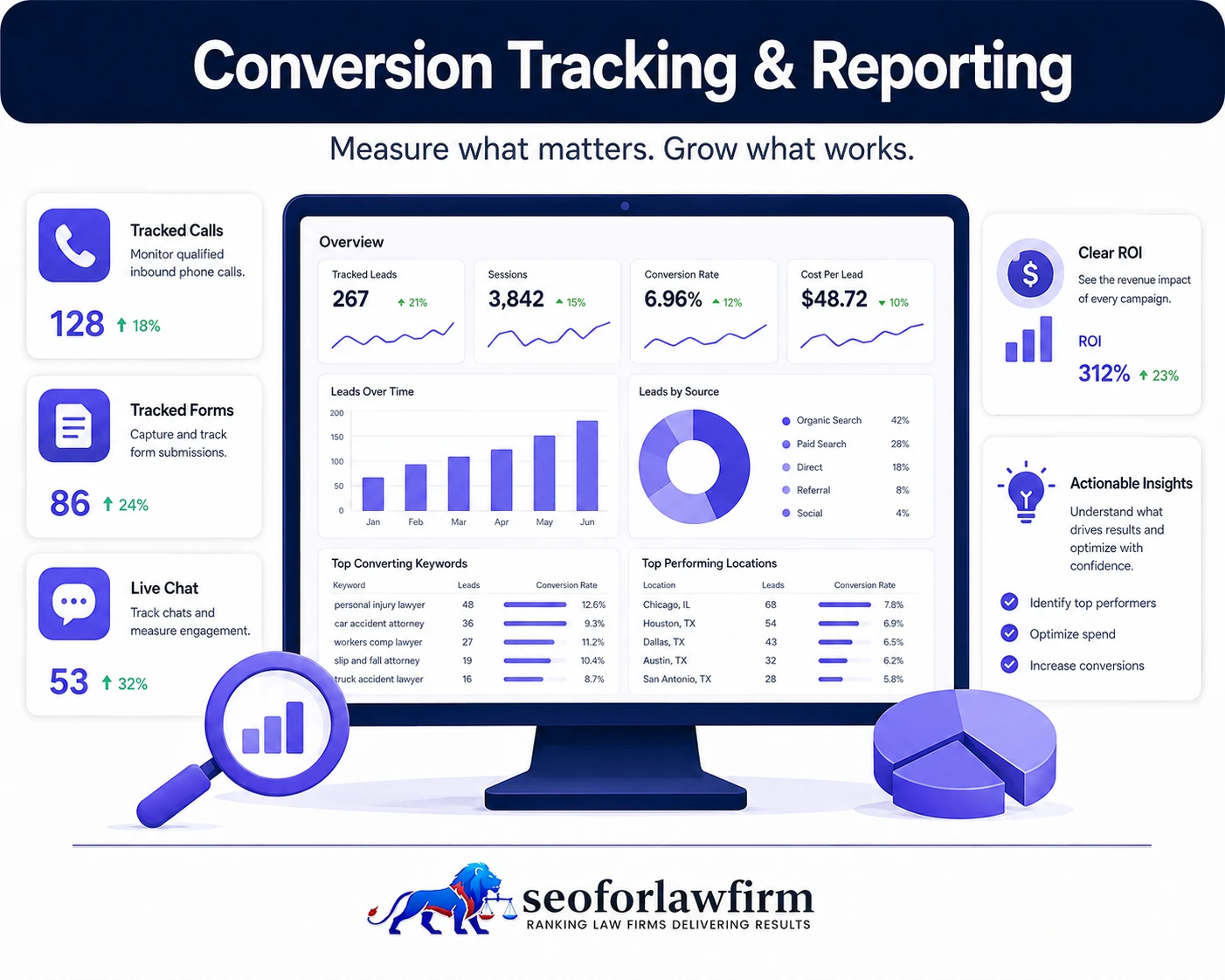
PPC reporting must show which campaigns, keywords, locations, search themes, ads, and landing pages generate qualified legal inquiries.

Chiemerie, CEO of SEOForLawFirm
CEO Perspective
We align Google Ads, search terms, location targeting, bidding, landing pages and call tracking with the cases your firm accepts. At SEOForLawFirm, I assess lead quality and intake capacity before recommending a larger advertising budget.
I would compare the search terms producing enquiries with the matters the firm actually accepts. A cheaper click is not useful if it repeatedly brings the wrong case type. Before expanding the budget, I would check the advertisement, landing page and intake outcome together.
SEOForLawFirm structures Google Ads around the legal searches most likely to represent immediate attorney demand.
Campaigns can separate legal problems by practice area, subservice, location, urgency, and economic value so expensive legal clicks do not all enter the same generic campaign.
Negative keywords remove irrelevant searches, bidding adjusts according to performance, and dedicated landing pages preserve message relevance after the click.
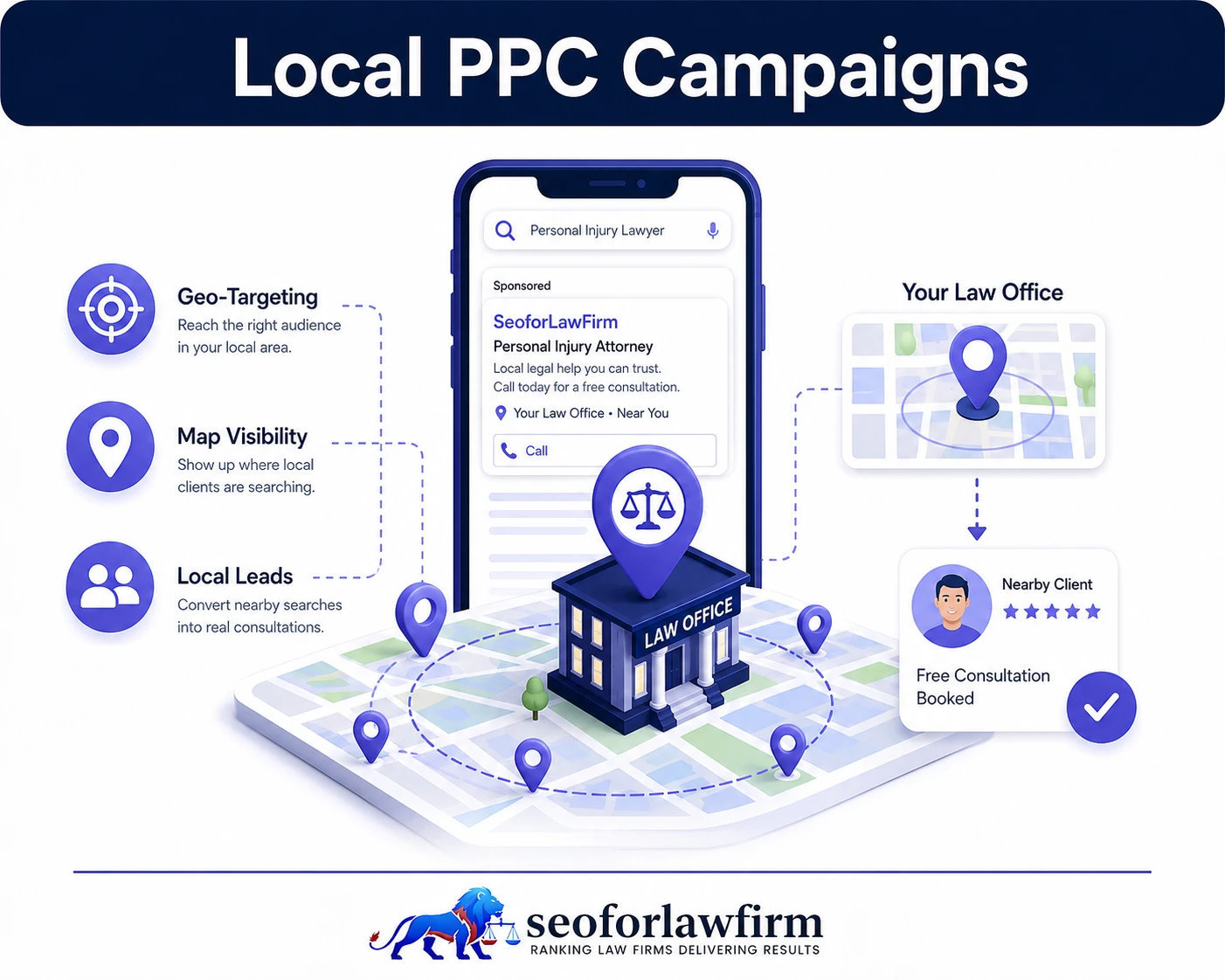
Local PPC limits paid-search exposure to the markets where the law firm serves clients.
Campaign targeting can combine cities, counties, service areas, radiuses, neighborhoods, landmarks, courthouses, hospitals, and location-modified keywords.
Mobile call ads and geographically relevant landing pages connect local legal searches with immediate phone or consultation actions.
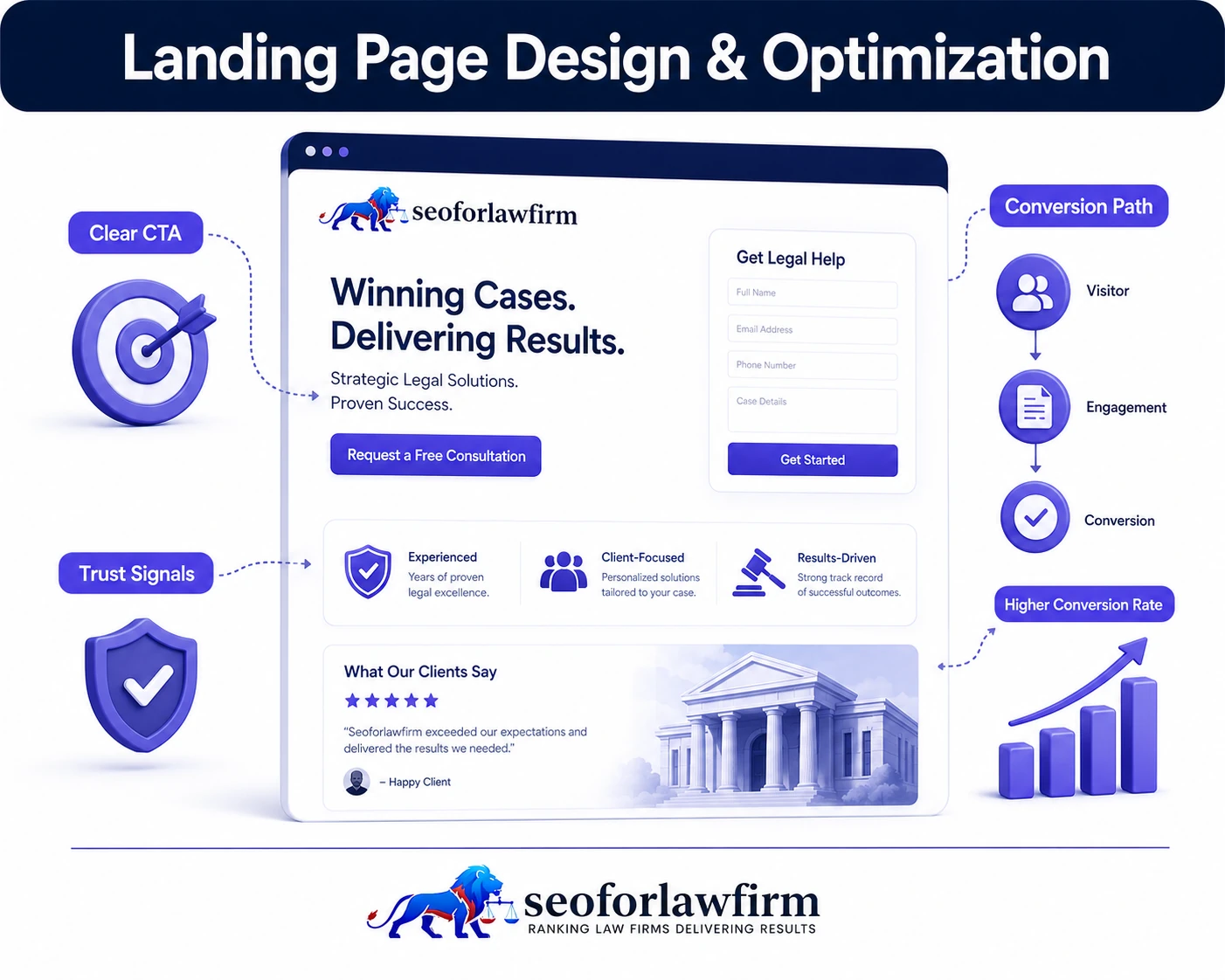
Paid legal traffic converts more effectively when the landing page directly matches the query and ad promise.
SEOForLawFirm builds campaign-specific landing pages around the client's immediate legal question, attorney credibility, case type, next steps, contact options, and the information needed before requesting a consultation.
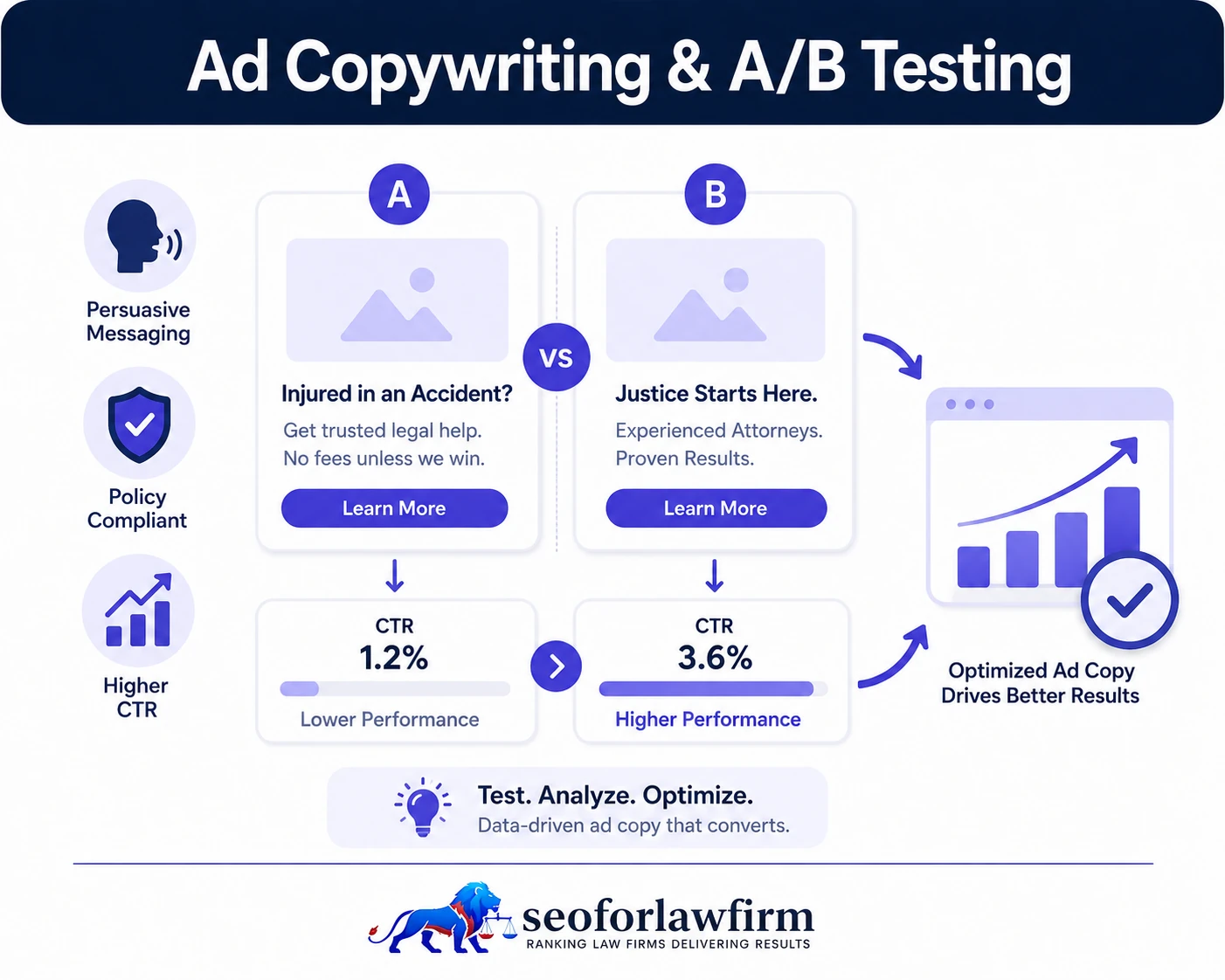
Legal PPC ad copy must communicate relevance quickly because the prospective client is comparing multiple attorneys within the same search results.
SEOForLawFirm tests headlines, descriptions, attorney positioning, case-type language, consultation offers, urgency signals, geographic wording, and calls to action.
Winning ad combinations remain tied to conversion data instead of click volume alone.
PPC reporting must show which campaigns, keywords, locations, search themes, ads, and landing pages generate qualified legal inquiries.
SEOForLawFirm connects call tracking, forms, live chat, Google Analytics, Tag Manager, paid-search data, and available CRM information to campaign performance.
Reporting can group conversions by semantic client intent, such as emergency arrest, injury after collision, urgent custody, or high-value transactional searches.
PPC places law firms directly in front of prospective clients at the moment they search for legal representation.
Paid search gives firms immediate visibility for competitive queries involving injuries, arrests, divorce, immigration, estate planning, and other legal matters where search intent often precedes a call or consultation.
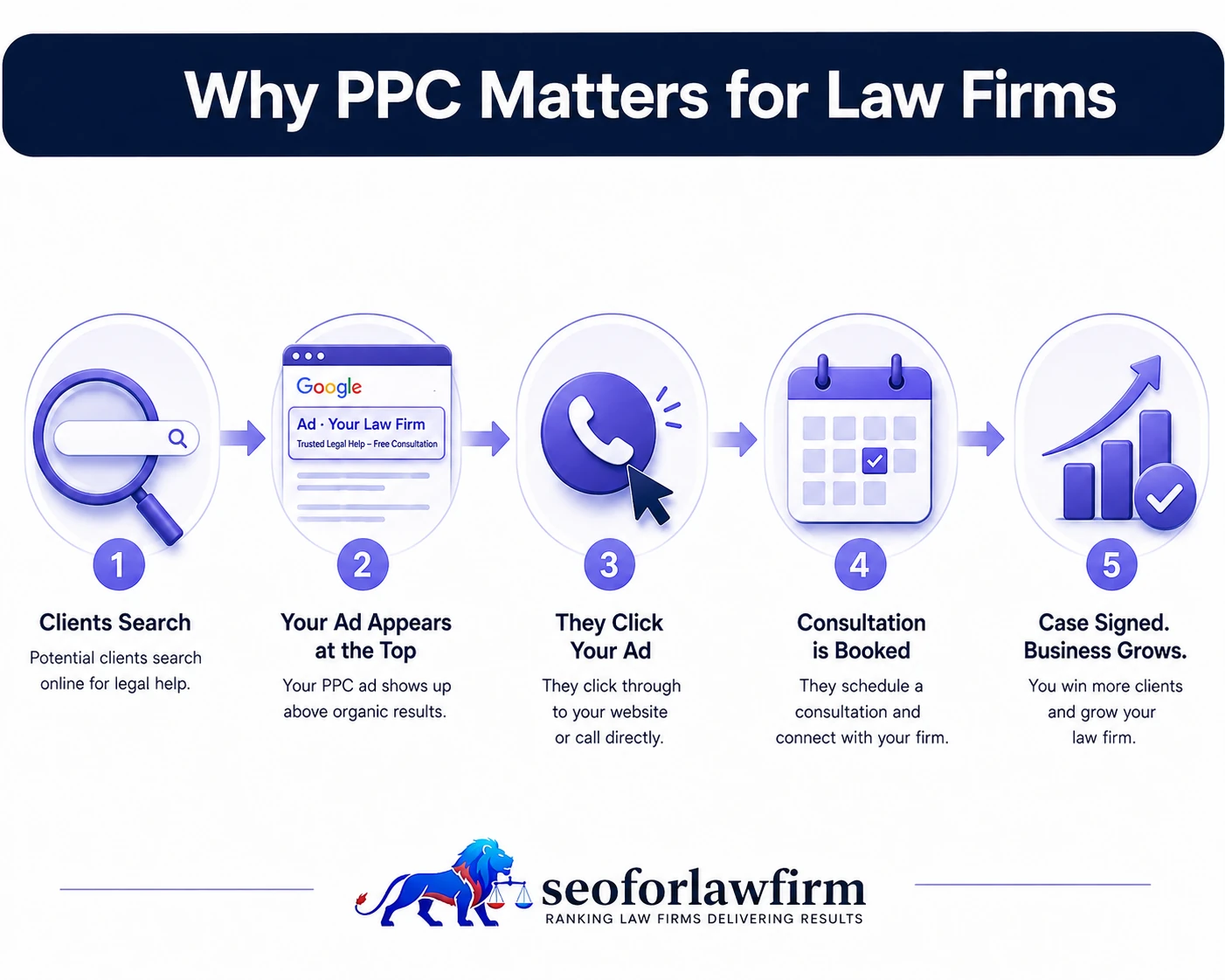
Paid search puts law firms above organic results for selected legal searches once campaigns begin serving.
Keywords can target people searching for a lawyer, consultation, defense attorney, accident attorney, divorce lawyer, or other immediate legal service.
Calls, forms, landing pages, campaigns, keywords, geographic markets, and consultation events can be tracked against paid-search investment.
High-intent legal queries receive dedicated campaign and ad-group structures aligned with practice areas, urgency, location, and hiring stage.
Headlines, descriptions, sitelinks, call assets, service details, and CTAs reflect the legal problem and intended next action.
Each campaign directs prospects toward pages built around one legal intent, clear trust signals, mobile usability, and visible contact options.
Calls, forms, chat starts, consultations, campaign sources, keyword groups, and retained-case data reveal which paid-search paths produce value.
Car accidents, truck crashes, wrongful death, catastrophic injury, premises claims, and other high-value accident searches.
DUI, felony defense, assault, drug charges, domestic violence, arrest-related searches, and other urgent defense matters.
Divorce, custody, high-asset divorce, support, emergency family matters, and consultation-stage searches.
Green cards, visas, removal defense, asylum, family immigration, employment visas, and multilingual legal searches.
Wills, trusts, probate, estate administration, elder planning, and location-specific attorney searches.
Business formation, contracts, litigation, transactions, outside counsel, and other commercial legal searches.
We connect each campaign with the relevant legal service, ad message and consultation action.
Search-term reviews, negative keywords and geographic controls help focus spend on suitable enquiries.
Calls, forms and available intake outcomes inform campaign decisions.
Readable pages, usable forms and tap-to-call controls support contact from mobile visitors.
REYNOLDS PERSONAL INJURY LAW +104% Cost per qualified lead decreased 38% Landing-page conversion rose from 4.1% to 8.3% Irrelevant search-term spend decreased 47% 31 retained personal injury matters
BARRETT CRIMINAL DEFENSE GROUP +97% Cost per consultation decreased 34% Mobile click-to-call conversion increased 79% DUI conversion rose from 5.0% to 9.2% 28 retained criminal defense matters
PIERCE FAMILY LAW ATTORNEYS +88% Cost per qualified lead decreased 36% High-asset divorce conversion increased 71% Priority impression share increased 54% 26 retained family-law matters
Final deliverables follow the agreed scope and implementation responsibilities.
PPC for lawyers is paid search advertising where a law firm bids for visibility when prospective clients search selected legal terms. The firm pays when users interact with eligible ads, and campaign performance is measured through clicks, calls, forms, consultations, and other conversion events.
The supplied PPC framework places many law-firm campaigns around $3,000–$10,000 per month, with required budget changing according to practice-area competition, geographic market, search volume, cost per click, campaign breadth, and growth goals.
PPC provides immediate paid visibility, whereas SEO builds organic authority over a longer period. Firms often use PPC for near-term lead acquisition and SEO for sustained search visibility.
The supplied PPC framework states that initial campaign results can begin within 48–72 hours after launch, with stronger optimization data and more consistent lead flow developing across the first 30–60 days.
The supplied framework recommends approximately $1,500–$2,000 per month as a minimum starting ad spend to generate enough search data for optimization and meaningful visibility in a target market.
SEOForLawFirm measures paid-search performance through cost per click, click-through rate, cost per qualified lead, calls, forms, consultations, landing-page conversion, campaign costs, geographic performance, and retained-case data when CRM attribution is available.
Lets make you an extra +$10M in Revenue
Build a paid-search system around high-intent legal queries, negative keywords, local targeting, bidding, ad testing, landing-page conversion, mobile calls, consultation tracking, and retained-case attribution.