⌕
Firm and office identity
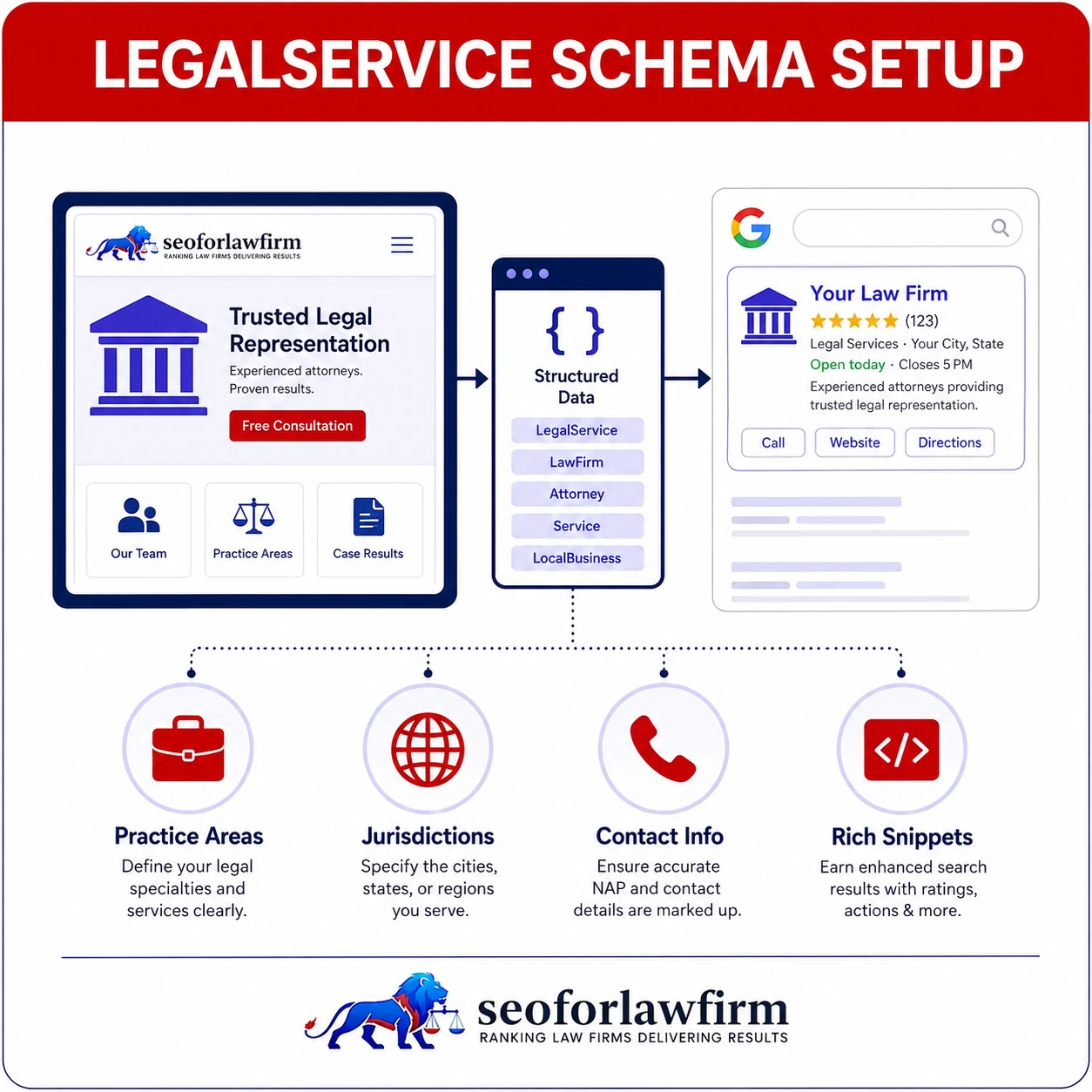
We document the firm’s public name, website, telephone number, real offices and approved profile links before writing markup. Organization and appropriate local-business descriptions use stable identifiers so different templates refer to the same firm. A service area is not presented as an office address.
▤
Attorney profiles and relationships
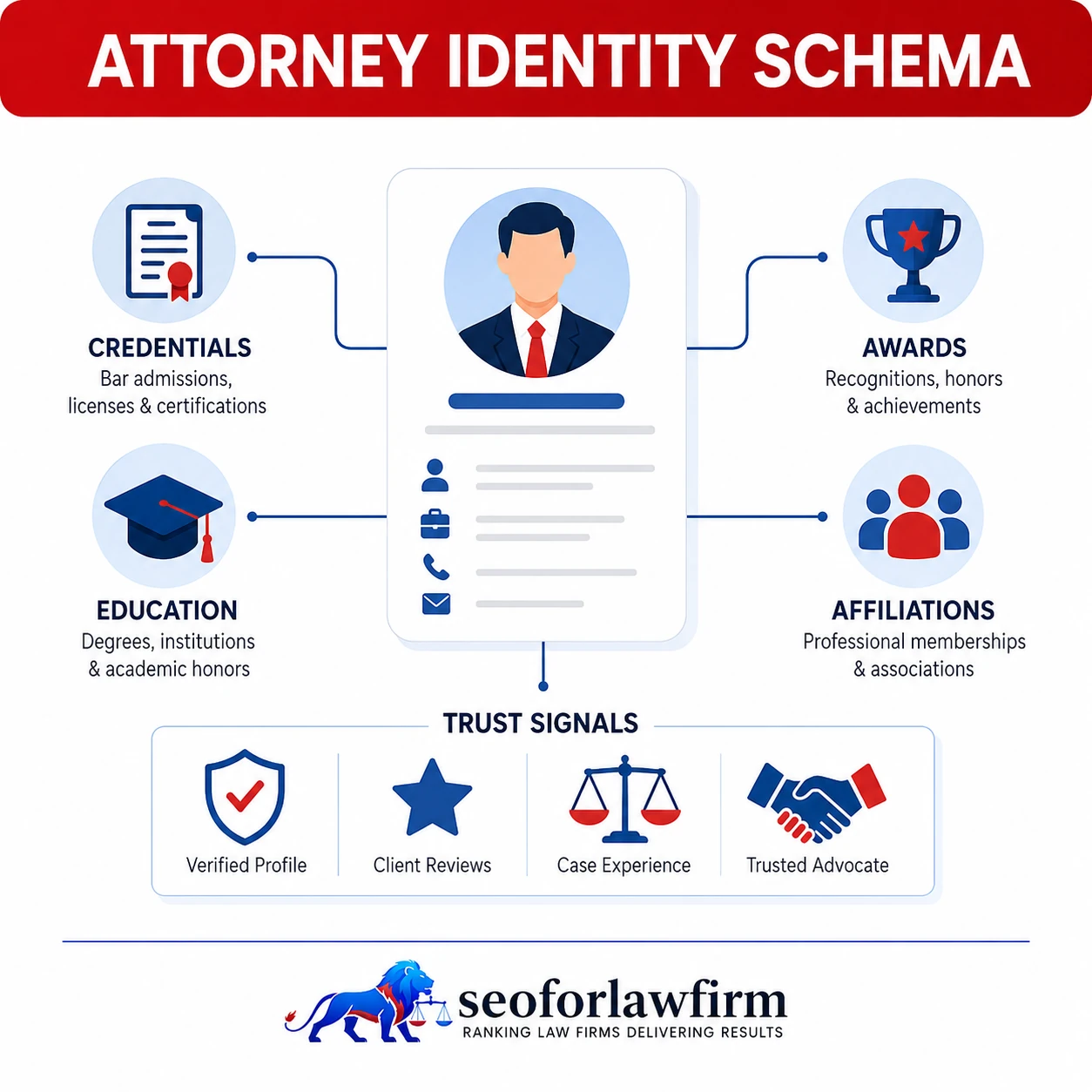
Attorney profiles need consistent names, biographies and connections to the firm. We map the people described on the site to their visible profile pages and the organization they work for. Credentials and affiliations enter the markup only when the firm supplies supporting facts.
↗
Service and practice-area relationships
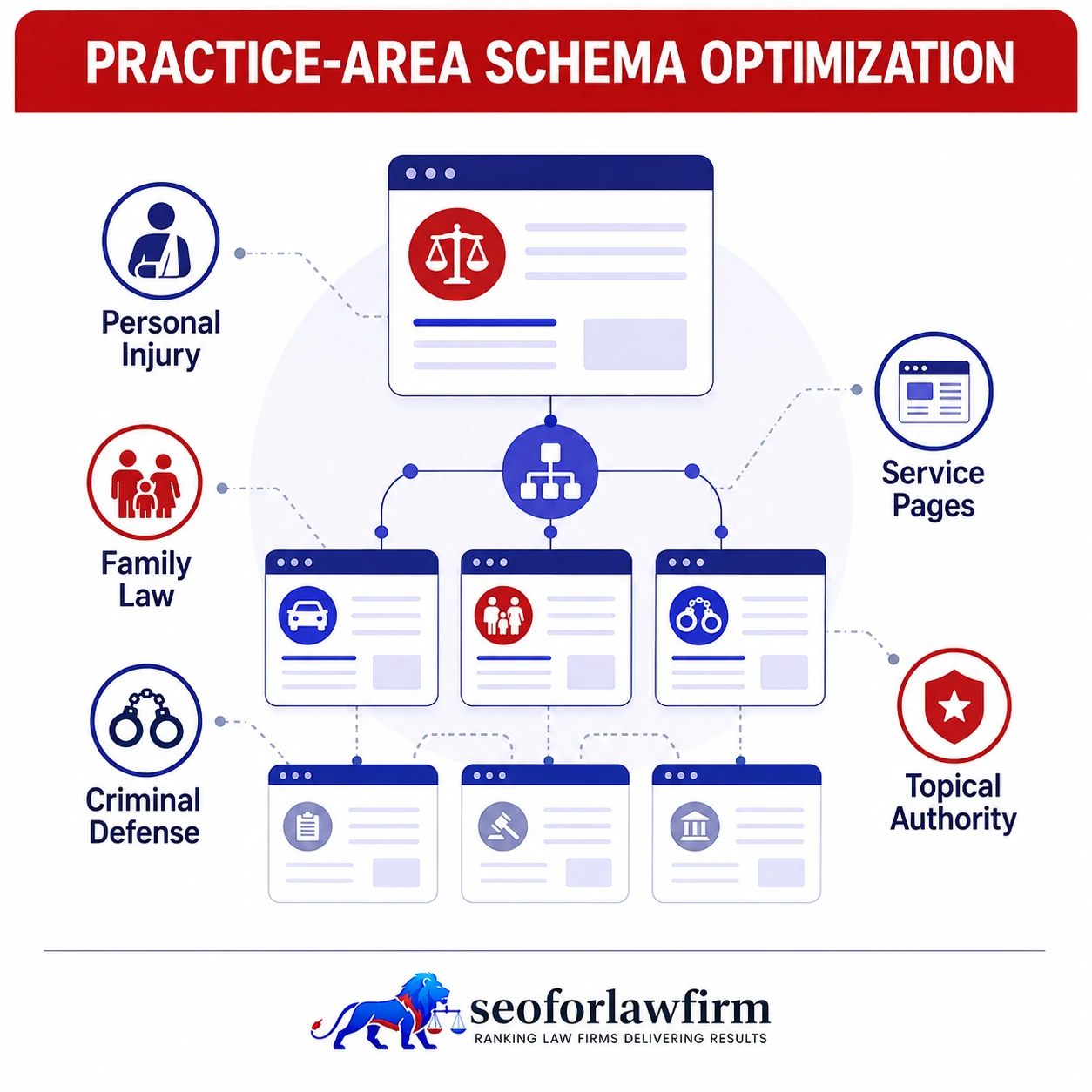
A service page describes a service; an attorney biography describes a person. We keep these roles distinct and connect them through the firm, relevant office and canonical page. Repeated templates use consistent identifiers rather than generating a new organization on every URL.
⌖
Articles and breadcrumbs
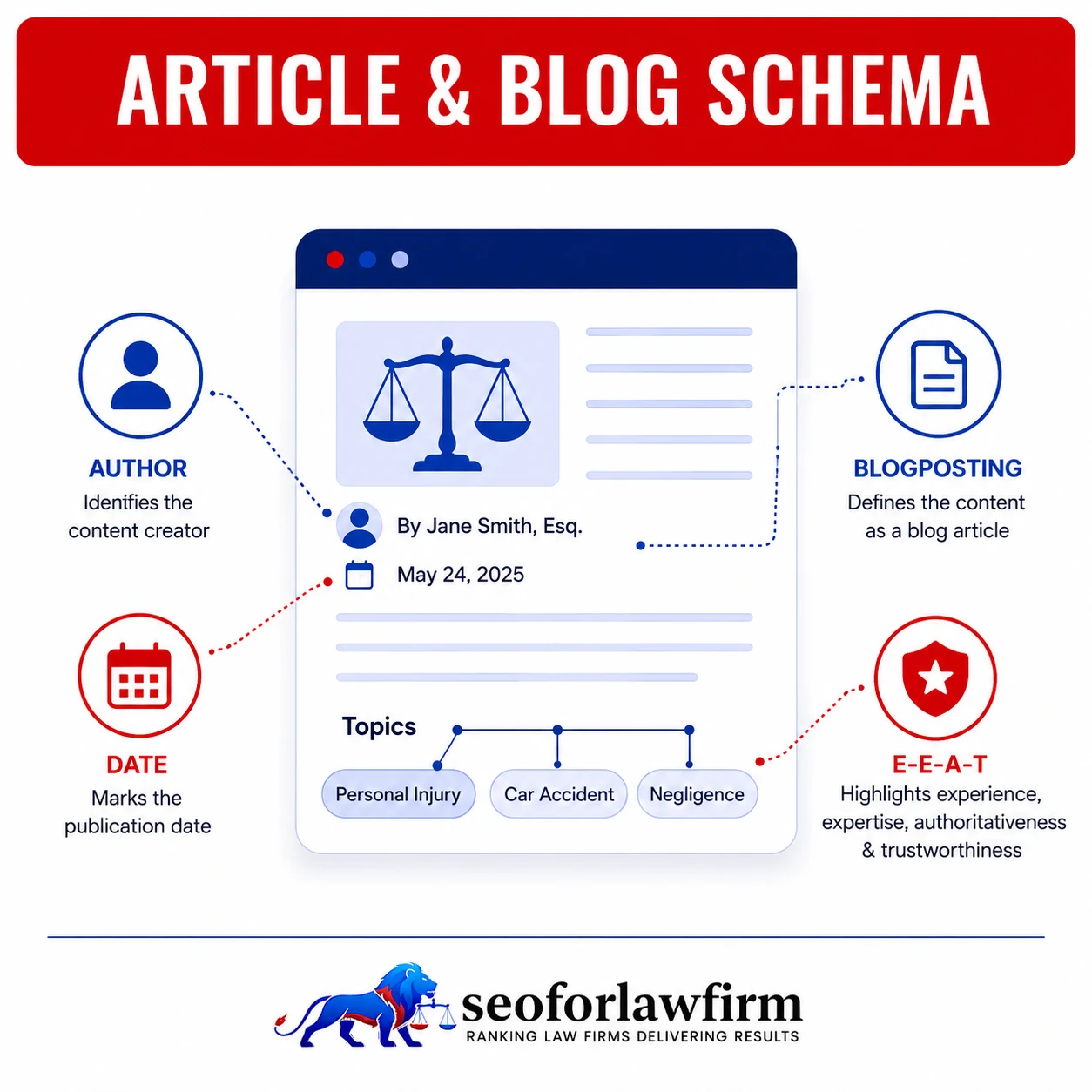
For editorial pages, we check the visible title, author, image and publication information against the structured description. Breadcrumbs follow the actual site hierarchy and point to useful parent pages. Dates should reflect the publication and meaningful update history.
◎
Conflict removal and validation
Themes, SEO plugins and custom code can all emit markup. We inventory those sources before choosing which system owns each entity and template. Duplicate descriptions are reviewed for conflicting identifiers, names, addresses and relationships.
▥
Deployment and ongoing maintenance
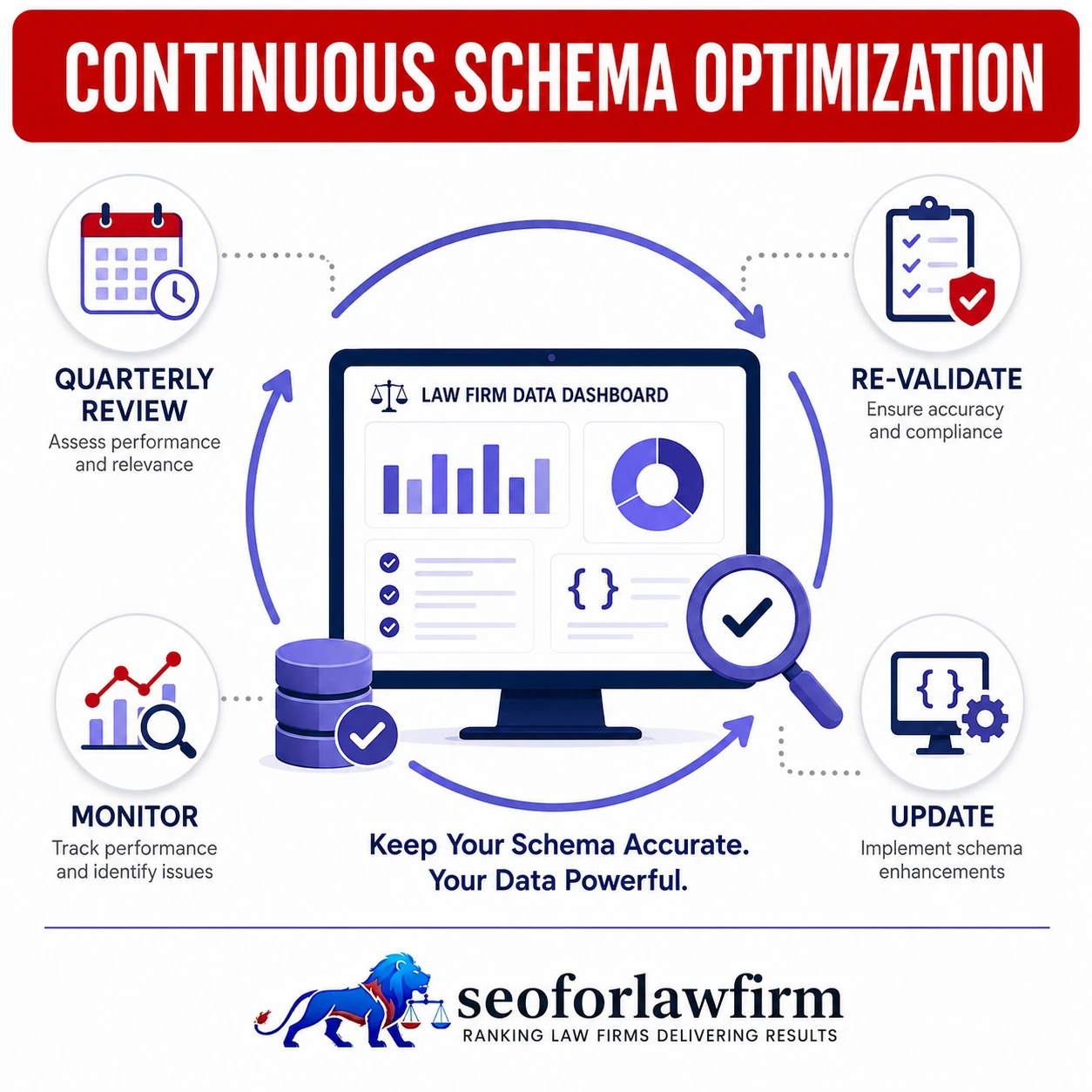
We test representative pages before release, record the implemented templates and retest after a theme or plugin change. The change log records what was removed, what replaced it and how to verify the live output.