Communication
Look for feedback about responsiveness, clear explanations and access to the team.
Read reviews on Trustindex ↗
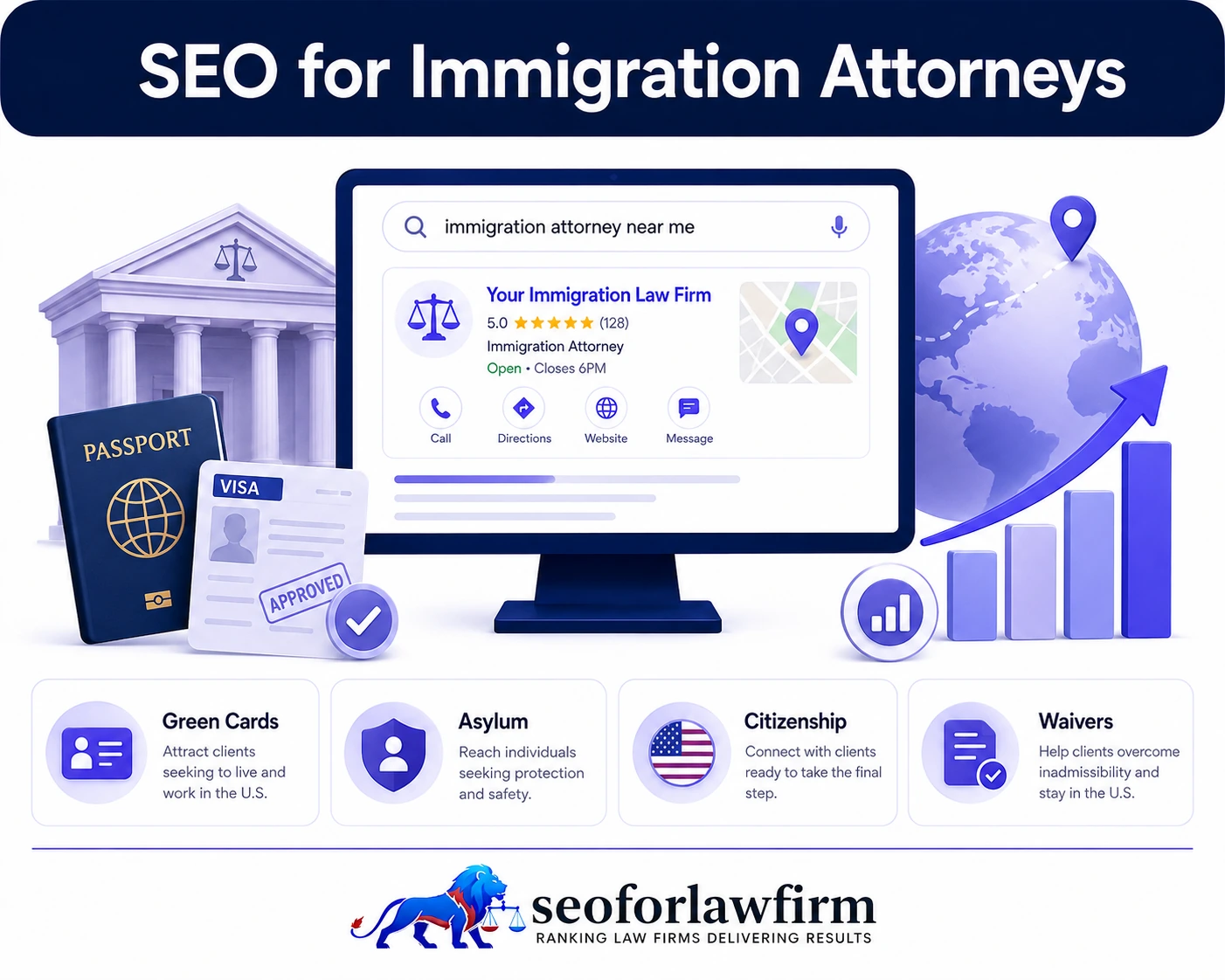
SEOForLawFirm provides SEO for immigration attorneys, organizing visa, green card, citizenship and removal-defense searches around the services the firm actually offers.
We connect technical SEO, local visibility, multilingual content and consultation pathways with immigration practice priorities. At SEOForLawFirm, I map the service and language first, then decide whether the reader needs a local office page, a detailed guide or a direct consultation route.
Example: immigration attorney near me
Read client feedback on our existing Trustindex profile. Review the original source for each review, its date and the service it discusses.
Look for feedback about responsiveness, clear explanations and access to the team.
Read reviews on Trustindex ↗Consider the service described and how it relates to the work your firm needs.
Read reviews on Trustindex ↗Read what clients say about understanding the work and discussing progress.
Read reviews on Trustindex ↗SEOForLawFirm connects technical performance, local immigration searches, immigration topical authority, trusted backlinks, multilingual visibility, and conversion systems so immigration queries lead to the correct service and consultation pathway.
Crawlability, Core Web Vitals, indexation, legal schema, mobile performance, site structure, internal linking, and immigration entity relationships.
Google Business Profile, Map Pack visibility, NAP accuracy, legal citations, city-service landing pages, reviews, and local immigration intent.
Green cards, asylum, visas, citizenship, waivers, deportation defense, employment immigration, family immigration, and long-tail immigration questions.
Immigration directories, legal associations, community organizations, regional publications, digital PR, professional sources, and competitor authority gaps.
Mobile-first forms, multilingual calls-to-action, click-to-call flows, consultation modules, trust cues, privacy messaging, and reduced intake friction.
Language-specific landing pages, culturally aligned search terms, hreflang implementation, multilingual calls-to-action, and international immigration search coverage.

Chiemerie, CEO of SEOForLawFirm
CEO Perspective
I would ask which languages the intake team can support before expanding multilingual pages. Translated content needs a matching consultation route and an accountable reviewer. I would keep business-immigration and removal-defense journeys distinct, then compare inquiries with the matters the firm can accept.
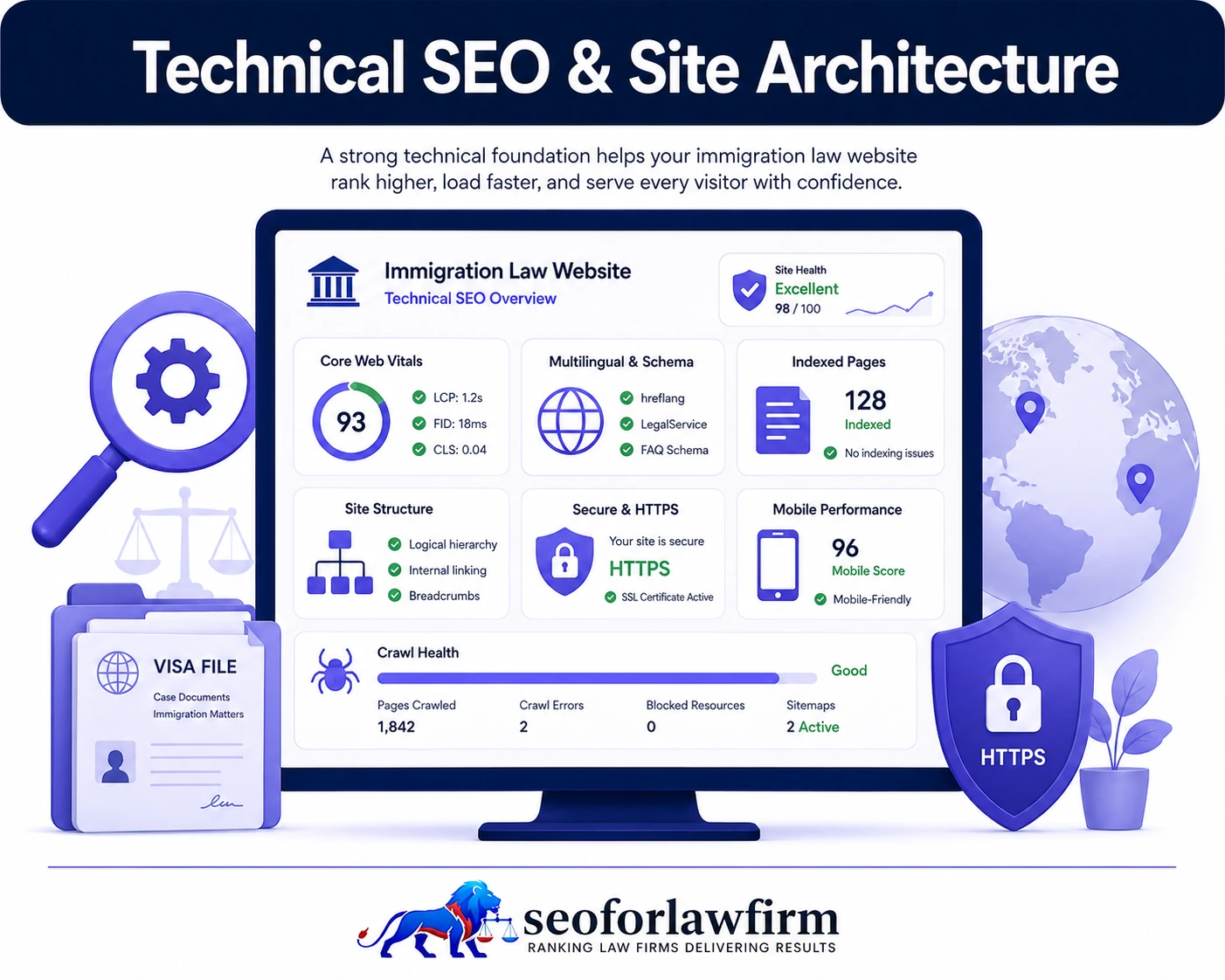
SEOForLawFirm technical SEO builds a fast, crawlable immigration website that search engines can interpret and prospective clients can use easily.
SEOForLawFirm audits indexation barriers, performance gaps, Core Web Vitals, schema errors, internal-link depth, duplicate immigration intent, mobile usability, and weak topical bridges between visa categories.
Immigration-specific structured data connects attorneys, immigration services, visa categories, offices, FAQs, local service areas, and multilingual pages.
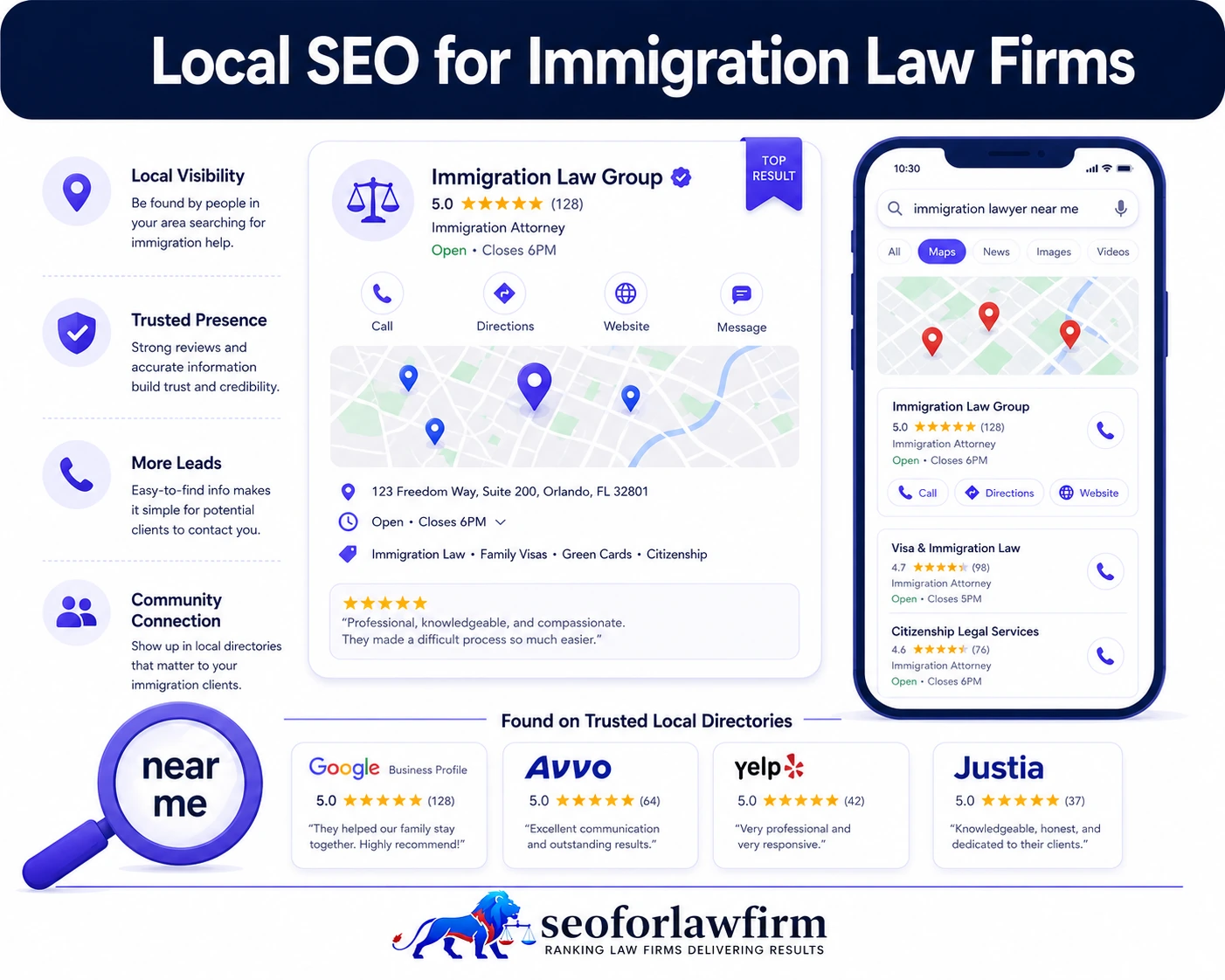
SEOForLawFirm local SEO targets Map Pack visibility for urgent “near me” and city-modified immigration searches.
SEOForLawFirm optimizes Google Business Profile services, categories, office data, appointment links, engagement fields, photos, reviews, and immigration-related profile information.
Location pages connect specific immigration services with individual cities so family visa, asylum, deportation defense, citizenship, waiver, and employment-visa searches lead toward consultation-ready pages.
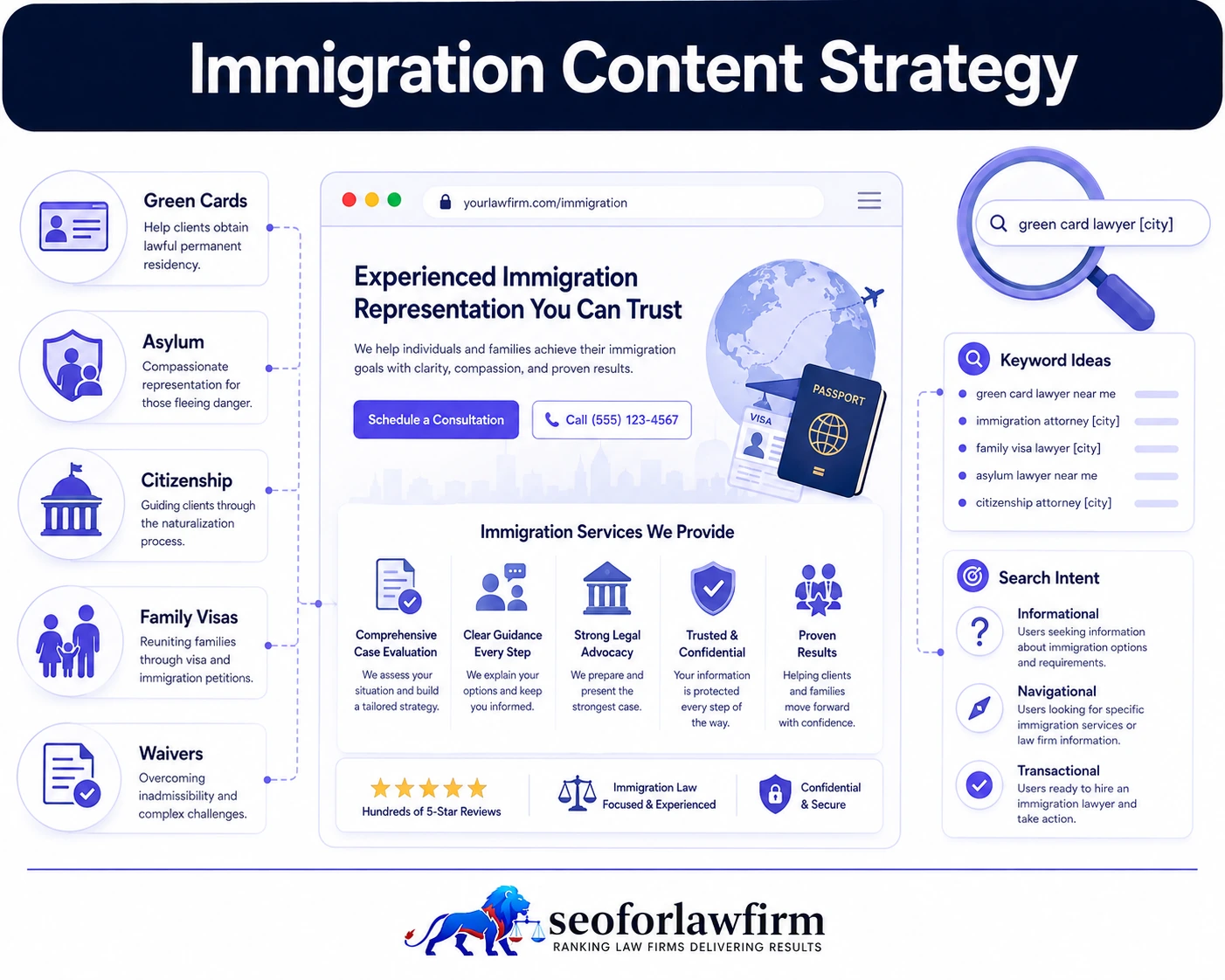
SEOForLawFirm organizes immigration services into semantic topical clusters instead of targeting disconnected keywords.
Service architecture can cover green cards, adjustment of status, family petitions, fiancé visas, asylum, VAWA, citizenship, waivers, removal defense, employment visas, business immigration, and related immigration procedures.
Supporting FAQs and guides answer specific immigration questions, procedural concerns, timelines, eligibility issues, and urgent search scenarios before moving visitors toward the appropriate service page.
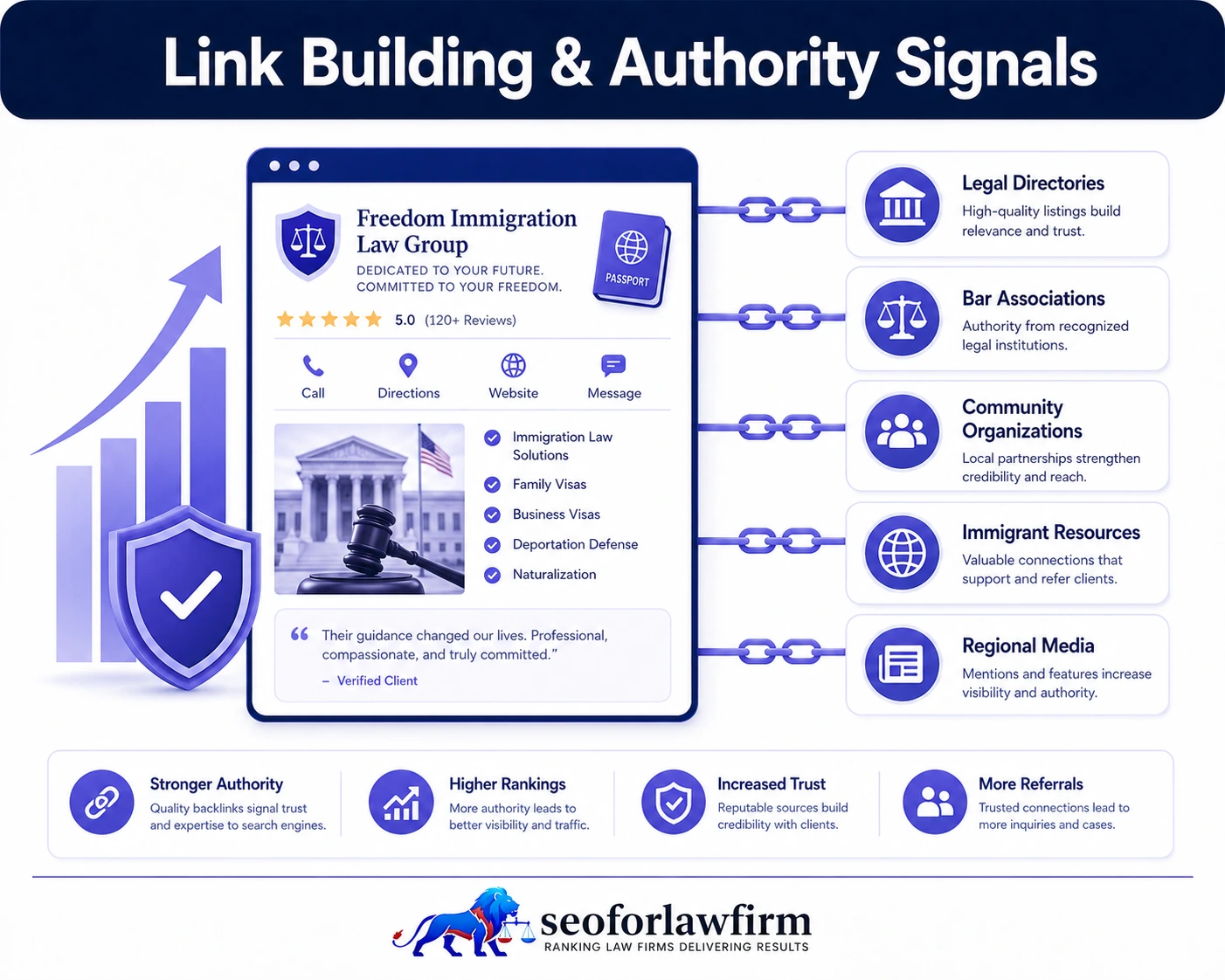
SEOForLawFirm builds immigration authority through relevant editorial and professional backlink sources.
Authority outreach can include immigration directories, bar-approved listings, community publications, regional media, student networks, professional resources, culturally relevant organizations, and immigration-adjacent publications.
Competitor backlink gaps are reviewed so authority acquisition strengthens immigration topical proximity instead of chasing unrelated link volume.
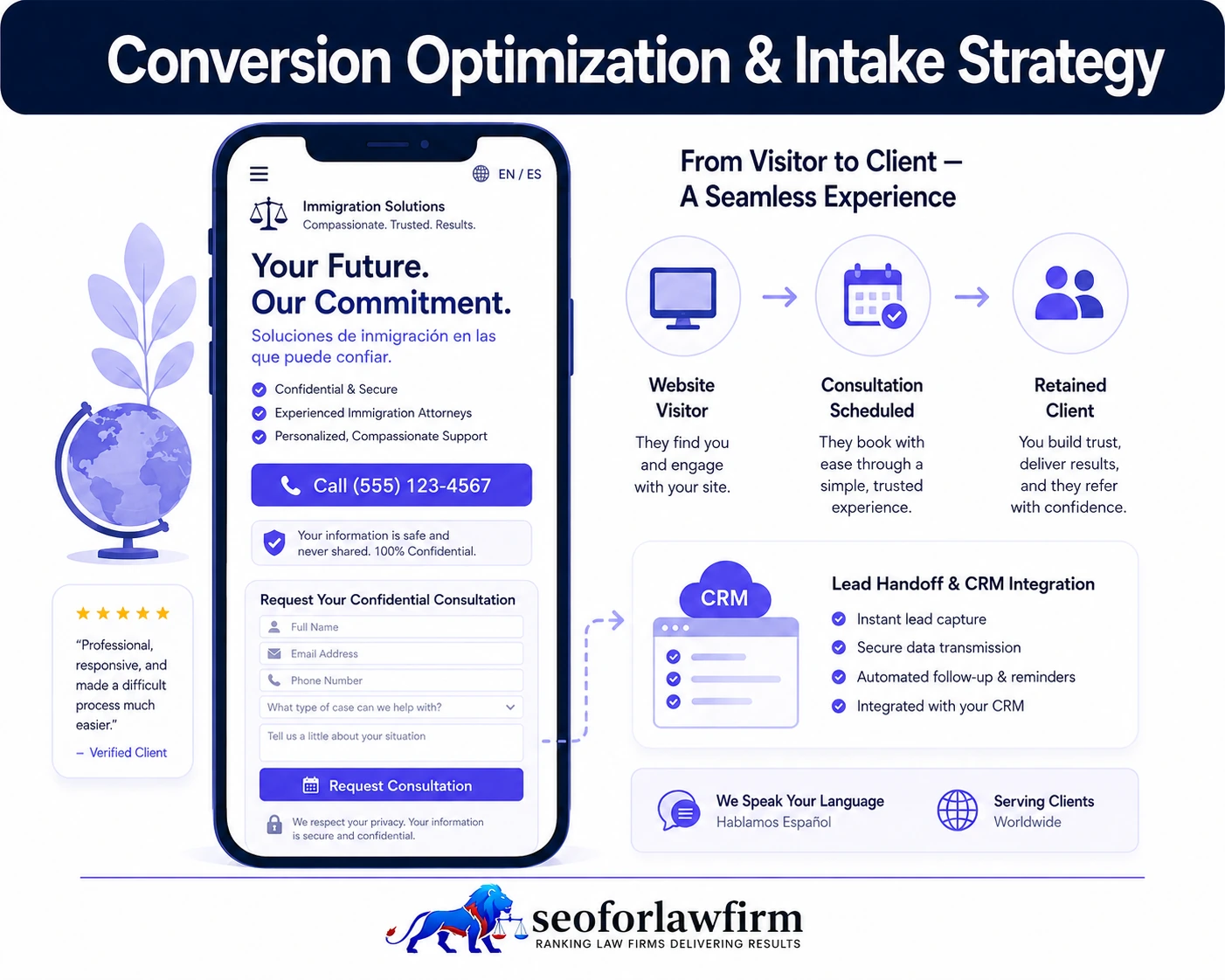
SEOForLawFirm conversion optimization turns immigration search traffic into scheduled consultations by reducing trust, language, and mobile friction.
Immigration prospects may be dealing with removal notices, visa denials, interview delays, immigration deadlines, family separation, employment issues, or uncertain legal status.
SEOForLawFirm builds clearer intake pathways with short forms, multilingual click-to-call options, consultation modules, visible privacy cues, service-specific calls-to-action, and mobile-first interaction.
Immigration clients search across multiple languages, countries, cultural contexts, and stages of the immigration process.
SEOForLawFirm develops language-specific landing pages where demand supports them and structures multilingual implementation around translated search behavior rather than direct word-for-word duplication.
Hreflang implementation, language-specific metadata, localized calls-to-action, cultural terminology, and language-specific keyword research help search engines identify the correct page for each audience.
Immigration SEO matters because immigration clients often search during urgent legal events and evaluate the first credible attorneys visible for the exact immigration problem.
Search demand can arise after visa denials, removal notices, immigration interviews, family sponsorship questions, employment changes, asylum concerns, naturalization issues, or immigration court deadlines.
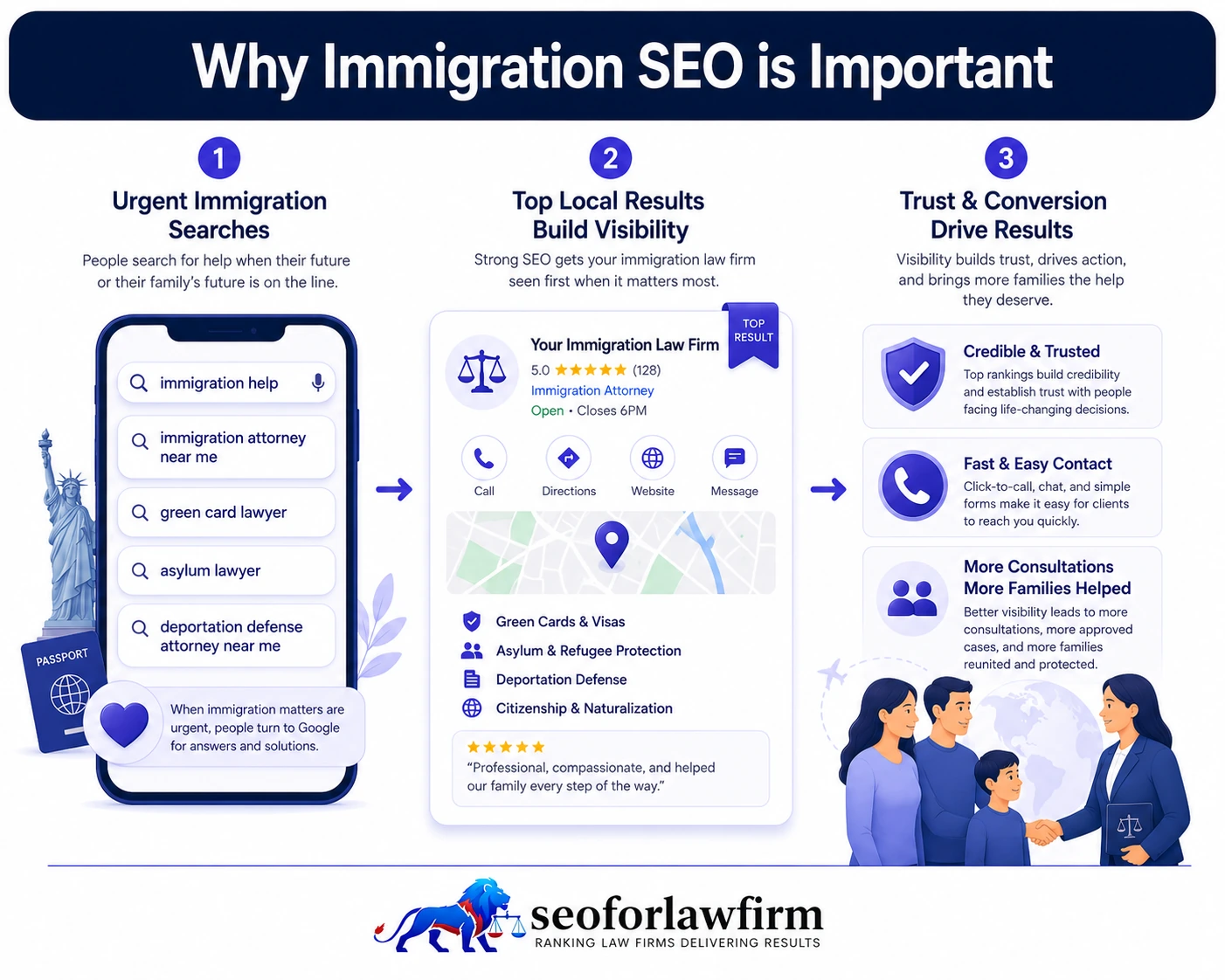
Visa denials, notices, court proceedings, family immigration deadlines, removal matters, and employment changes can trigger immediate attorney searches.
Immigration prospects compare proximity, Google Maps presence, reviews, languages, attorney experience, service relevance, and consultation options.
Immigration law firms serving multilingual communities require search architecture that accounts for language preference and culturally specific query behavior.
Immigration search architecture changes according to case type, urgency, language demand, client geography, visa category, and whether a practice focuses on families, employers, humanitarian matters, immigration court, or broader immigration representation.
Family petitions, adjustment of status, fiancé visas, marriage-based green cards, consular processing, and family sponsorship.
H-1B, L-1, EB-2, EB-3, employment-based green cards, corporate immigration, investor matters, and employer sponsorship.
Deportation defense, removal proceedings, immigration court, bond hearings, appeals, waivers, and urgent representation.
Asylum, humanitarian relief, VAWA matters, immigration protection, urgent filings, and related immigration relief.
Naturalization, citizenship applications, eligibility issues, interview preparation, denials, and related status matters.
Temporary visas, family visas, employment visas, fiancé visas, investor visas, visa denials, and consular matters.
Practices serving Spanish, French, Mandarin, Arabic, and other language communities through multilingual legal services.
Immigration firms targeting several cities, offices, regions, service areas, and localized immigration markets.
SEOForLawFirm treats immigration SEO as a connected system of immigration entities, languages, locations, client urgency, legal-service intent, attorney authority, technical retrieval, and consultation behavior.
Visa type, immigration benefit, attorney service, city, procedure, eligibility issue, deadline, court matter, and client intent receive explicit relationships.
Language-specific pages, hreflang, translated search intent, local language demand, and culturally aligned calls-to-action support multilingual discovery.
Immigration intake design considers urgent calls, court matters, removal issues, visa deadlines, mobile behavior, privacy concerns, and language barriers.
Google Business Profile, city-service pages, immigration content clusters, legal citations, reviews, community links, and immigration authority operate as one system.
Your report separates implementation progress, relevant search visibility and firm-confirmed consultation outcomes. We establish the baseline before attributing a change to the campaign.
The facts, URLs and systems included in the engagement.
Recorded work and the person responsible for each dependency.
Resolved issues, retesting and the remaining work queue.
The agreed scope combines technical checks, service-page planning, local visibility, content development, internal linking and consultation tracking for the matters your firm accepts.
Plan an initial three-to-six-month cycle for prioritized implementation, content development and measurement. Competitive visibility can take longer; this is a planning period, not a promise of first-page rankings or case volume.
Pricing follows website condition, practice breadth, locations, content production, development, authority work and reporting. The proposal identifies deliverables, responsibilities and fees before work begins.
Yes. We begin with the existing website and identify improvements while retaining useful content, approved images and functioning consultation paths. A redesign is proposed only when the evidence supports it.
We compare relevant search visibility and service-page engagement with consultation requests, accepted inquiries and retained matters where the firm supplies intake data. Traffic alone does not establish business value.
No. Search rankings and legal hiring decisions cannot be guaranteed. Reporting separates completed work from measured search changes and firm-confirmed intake outcomes.
Share your priority practices, current systems, and the issues your team wants to resolve. SEOForLawFirm will discuss the evidence to review, implementation dependencies, and a defined proposal.